
Obstetrics & Gynaecology
Specialty Champions
2024-2025: Jenny Baker & Maria-Eirini Georgiou
2025-2026: Aoife Neill & Meghan Leonard
Introduction
This webpage provides a concise overview of Obstetrics & Gynaecology (O&G) for UK medical students, aligned with the MLA content map. It summarises the specialty, common presentations, training pathway, and key resources.

Specialty Description
O&G combines the care of women during pregnancy, childbirth and the postnatal period (obstetrics) with the management of disorders of the female reproductive system (gynaecology). It is a broad specialty with acute emergencies, elective surgery, chronic disease management and preventive health through screening. Practitioners often work in multidisciplinary teams with midwives, neonatologists, anaesthetists, and other specialists.

Training Pathway
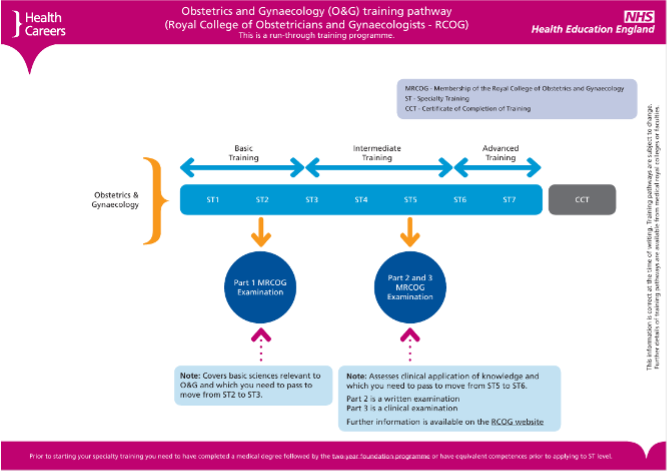
UK training in O&G requires a minimum of 7 years of specialty training (ST1–ST7), to be completed following the two years of foundation training. The programme is divided into basic, intermediate and advanced levels of training.
The programme follows the core curriculum, and also incorporates ultrasound training. Once you progress to ST5 , you will start to develop the specific skills needed for the areas in which you wish to practise as a consultant by choosing Special Interest Tradules (SITMs) or by applying for subspecialty training. Once you have successfully completed the programme, you will be awarded the Certificate of Completion of Training CCT. This qualifies you for entry onto the Specialist Registrar in the UK, which you need to be able to practise as a consultant in the NHS.
Common Conditions & Procedures
To pass your MLA exam at the end of 4th year there are key conditions and presentations listed in the GMC MLA content map found here on pgs. 33 and 34:
https://www.gmc-uk.org/-/media/documents/mla-content-map-_pdf-85707770.pdf
High Yield Question Topics in the MLA
Ectopic pregnancy
Pre-eclampsia
Gestational diabetes
Placenta praevia / abruption
Post-partum haemorrhage
Normal labour
Fibroids
Endometriosis
Cervical cancer
Ovarian cancer
Pelvic inflammatory disease
Contraception
Menopause
Sub-fertility
STIs
Urinary incontinence
Other learning resources to help you pass exams
Other learning resources to help you pass your exams:
https://zerotofinals.com/obgyn/ - Covers all theory (main topics) required for passing QUB O&G MCQ exams.
https://oscestop.com/index.html - PDFs available to download for free. These are fantastic for guiding history taking and examination of the pregnant abdomen. There are also great PDFs for explaining the mechanisms of labour and how to manage labour.
https://quesmed.com/ - Question banks with really useful explanations and flashcards.
https://app.pulsenotes.com/specialities/obstetrics/notes & https://app.pulsenotes.com/specialities/gynaecology/notes also provides concise summaries of different topics in both Obstetrics and Gynaecology.
https://oxfordmedicaleducation.com/category/oandg/ provides some useful pneumonics if you want to save time.
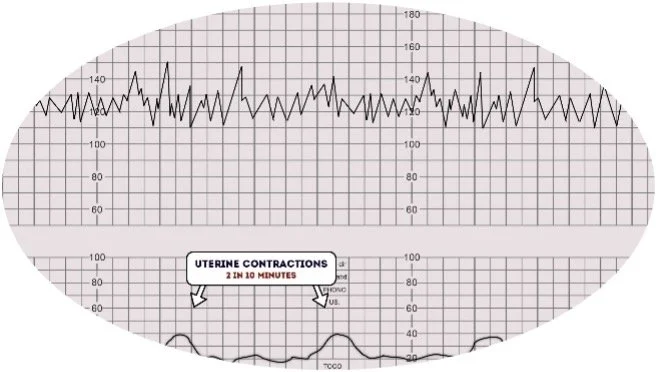
https://geekymedics.com/how-to-read-a-ctg/ to help with the dreaded CTG interpretation.
https://www.rcog.org.uk/en/guidelines-research-services/guidelines/?q=pph&subject=&type=Green-top+Guidelines&orderby=datedesc&_t_dtq=true Everyone has heard of NICE CKS for GP. The Obstetric Equivalent is ‘RCOG Greentop Guidelines’ e.g. PPH Management.
https://www.youtube.com/watch?v=l_gUHBYCoec&t=2775s BIMA Clinical Crash Course for Obs&Gynae (extremely useful for last minute revision for exams) · https://teachmeobgyn.com/ for illustrated descriptions of high-yield topics and concepts
Societies
RCOG (Royal College of Obstetricians and Gynaecologists) - Main UK body for training, exams (MRCOG), guidelines, and resources.
BMA (British Medical Association) - Careers advice, contracts, support.
BSGE (British Society for Gynaecological Endoscopy) - Focused on minimal access surgery.
BFS (British Fertility Society) and BGCS (British Gynaecological Cancer Society) - Subspecialty focus.
Journals & Interesting Literature
BJOG - International Journal of Obstetrics & Gynaecology.
TOG (The Obstetrician & Gynaecologist) - Educational review journal of RCOG.
BMJ Sexual & Reproductive Health.
Tips for Placement
Get stuck in - if you appear interested, staff are more than happy to take you with them and teach you. You will get so much more out of your placement.
Midwives are your best friends – they loved teaching about labour, post-birth care and they are great at getting you stuck in to help.
Wear shoes you don’t mind having to dump by the end of placement – C-sections can get messy between blood and amniotic fluid.
Don’t leave your log books until the last weeks as there is plenty to do!
Try get yourself to clinics early in placement as it’s a great place to practice abdominal examinations under supervision.
Babies love to be born at night! – use your night shifts to get your logbooks signed off.
Don’t be intimidated initially!!! Obs & gynae is highly specialised and sometimes it feels like they have their own language but you will get to grips with it!!
O&G MCQ Examples
Q1:
A 76-year-old woman presents with post-menopausal bleeding for the past 4 months. She is diagnosed with well-differentiated adenocarcinoma (stage II) on endometrial biopsy. There is no evidence of metastatic disease. Which is the most appropriate treatment?
1) Transcervical endometrial resection
2) Total abdominal hysterectomy
3) Provera (medroxyprogesterone acetate)
4) Wertheim’s radical hysterectomy
5) Total abdominal hysterectomy with bilateral salpingo-oophorectomy
Explanation:
(5) Total abdominal hysterectomy with bilateral salpingo-oophorectomy is the treatment of choice for stage I and II endometrial carcinoma. Provera is a progesterone used as a hormonal treatment for endometrial carcinoma - it acts by slowing the growth of malignant cells in the endometrium. Wertheim's radical hysterectomy includes removal of lymph nodes and is used to treat stage IIB endometrial carcinoma.
Q2:
A 25-year-old woman presents to her GP with a continuation of her chronic pelvic pain, which has not been helped with regular paracetamol and ibuprofen use. She continues to suffer from severe pelvic pain before her period, which is irregular. She is not sexually active and does not plan to become pregnant soon. Her main priority is her pain management, and she is open to any treatment. She has a past medical history of migraines with aura, for which she takes sumatriptan and propranolol.
What would be an appropriate next-line treatment?
1) Bilateral salpingo-oophorectomy with hysterectomy
2) COCP
3) GnRH analogue
4) Oral diclofenac
5) POP
Explanation:
(5) If analgesia doesn't help endometriosis then the combined oral contraceptive pill or a progestogen should be tried
Q3:
A 32-year-old woman delivers her first child vaginally at term in the labour ward. The delivery is uncomplicated, but within 15 minutes she begins to bleed heavily. She appears pale and tachycardic. On examination, her uterus feels soft and enlarged above the umbilicus. Immediate management is started: two large-bore cannulas are inserted, bloods are sent including group and save, and warmed crystalloid infusion is commenced. The midwife is rubbing up the fundus while another team member inserts a urinary catheter. Intravenous oxytocin has just been administered.
Which of the following interventions should be given next to reduce the risk of death from postpartum haemorrhage?
1) IV tranexamic acid
2) IM ergometrine
3) Intrauterine balloon tamponade
4) IM carboprost
5) Surgical uterine artery ligation
Explanation:
(1) Tranexamic acid should be administered as early as possible in the management of postpartum haemorrhage
Q4:
A 23-year-old woman who is 28 weeks pregnant attends the joint antenatal and diabetes clinic, for a review of her gestational diabetes.
She was found to have gestational diabetes at 24 weeks gestation after glucose was found on a routine urine dipstick. She had 2 week trial of lifestyle modifications, which did not lead to any improvement. After this, she was then started on metformin for the past 2 weeks, which has equally not improved her daily glucose measurements.
On examination, her symphysio-fundal height is 28 cm and foetal heart rate is present.
What is the most appropriate next step in her management?
1) Prescribe glibenclamide
2) Prescribe gliclazide
3) Prescribe gliclazide and glibenclamide
4) Prescribe short-acting and long-acting insulin
5) Prescribe short-acting insulin only
Explanation:
(5) Gestational diabetes is treated with short-acting, but not longer-acting SC insulin. This woman has been trialled on both lifestyle modifications for 2 weeks, and then metformin for 2 weeks, and neither of these has led to improvement of her gestational diabetes. The next step in her treatment should be to offer short-acting insulin, alongside education on how to dose insulin in accordance with meals.
Q5:
A 27-year-old woman presents to the Emergency Department with sharp, right lower abdominal pain, which has been intermittently present for several days. It does not radiate anywhere. It is not associated with any gastrointestinal upset. Her last menstrual period was 8 weeks ago. She is sexually active although admits to not using contraception all the time. Her past medical history includes multiple chlamydial infections. On examination, the abdomen is tender. An internal examination is also performed; adnexal tenderness is demonstrated. A urine pregnancy test is positive.
Given the likely diagnosis, which of the following is the investigation of choice?
1) Diagnostic laparoscopy
2) Serial serum beta-hCG
3) Transvaginal US
4) Transabdominal US
5) Nucleic acid amplification test (NAAT)
Explanation:
(3) The investigation of choice for ectopic pregnancy is a transvaginal ultrasound
Q6:
A 28-year-old woman presents to the clinic with vaginal bleeding that started 1 day ago. She is 8 weeks pregnant, based on her last menstrual period. She reports mild cramping but is otherwise healthy. A urine pregnancy test is positive.
On examination, her pulse is 88 bpm, blood pressure is 120/75 mmHg, and her temperature is 36.9ºC. A transvaginal ultrasound shows a gestational sac measuring 22 mm, but no fetal pole or yolk sac is visualised. The cervical os is closed. She has opted for medical management to terminate the pregnancy.
Which option is the best treatment plan?
1) Mifepristone and prophylactic antibiotics
2) Mifepristone, analgesia, and anti-emetics, with misoprostol after 48 hours
3) Misoprostol and prophylactic antibiotics
4) Misoprostol, analgesia, and anti-emetics, with mifepristone after 48 hours
5) Misoprostol, analgesia, anti-emetics, and prophylactic antibiotics
Explanation:
(2) Women having medical management of a miscarriage should be offered antiemetics and pain relief
Q7:
A 23-year-old patient who is 22 weeks pregnant attends your GP clinic concerned about a high reading on a blood pressure machine at home. She is asymptomatic and has no past medical conditions. You take her blood pressure at the clinic which is 162/114 mmHg. There is no evidence of proteinuria on urine dipstick testing.
What is the most appropriate management?
1) Arrange obstetric assessment immediately with likely admission to hospital
2) Repeat the BP reading in clinic the following day
3) Give lifestyle advice and assess again in 7 days time
4) Start home BP monitoring for 7 days and discuss results with obstetrics
5) Start labetolol and aspirin and assess again in 7 days time
Explanation:
(1) Pregnant women with blood pressure ≥ 160/110 mmHg are likely to be admitted and observed
Q8:
A 32-year-old woman attends antenatal clinic for review at 36+2 weeks’ gestation. She has a major placenta praevia confirmed on ultrasound at both 20 and 32 weeks. She has had no vaginal bleeding during pregnancy and is otherwise well. What is the most appropriate management to reduce her risk of emergency caesarean section due to bleeding?
1) Allow spontaneous labour, then assess mode of delivery
2) Offer elective labour between 36+0 and 37+6 weeks
3) Plan elective delivery at 39+0 weeks
4) Discharge with advice to returm if bleeding occurs
5) Repeat ultrasound at 38 weeks before deciding on delivery
Explanation:
(2) Elective delivery should be offered between 36+0 and 37+6 weeks of gestation for women with a major placenta praevia to reduce the risk of emergency caesarean section due to bleeding
Q9:
A 30-year-old pregnant woman, gravida 2, para 1, at 32 weeks gestation, presents to the Emergency Department with sudden onset of vaginal bleeding and abdominal pain. She appears pale and anxious on examination. Her vital signs are blood pressure 140/90 mmHg, pulse 110 beats per minute, respiratory rate 20 breaths per minute, and temperature 37°C. Abdominal examination reveals a tender and hard uterus with a fundal height of 30 cm, but there are no signs of fetal distress.
What is the most appropriate initial management for this patient?
1) Administer antibiotics and monitor closely
2) Administer anticoagulants and monitor closely
3) Administer tocolytics and observe
4) Administer steroids and monitor closely
5) Perform an emergency caesarean section
Explanation:
(4) Management of placental abruption when the fetus is alive, <36 weeks and not showing signs of distress is to admit and administer steroids
Q10:
A 30-year-old sexually active woman presents to the emergency department with a 2-day history of lower abdominal pain, fever, and abnormal vaginal discharge. She describes the abdominal pain as dull and crampy, which worsens with movement. On examination, she has a fever of 38.2°C and tenderness in the lower abdomen. A pelvic examination reveals cervical motion tenderness and adnexal tenderness. She reports a history of multiple sexual partners and inconsistent condom use. Her pregnancy test is negative.
What is the correct initial management for this patient?
1) IM ceftriaxone in a clinic with 14 days of oral doxycycline
2) IM ceftriaxobe in a clinic with 14 days of oral doxycycline and metronidazole
3) IM ceftriaxone with oral fluconazole
4) Oral metronidazole for 7 days
5) Surgical intervention
Explanation:
(2) Pelvic inflammatory disease: stat IM ceftriaxone followed by 14 days of oral doxycycline + oral metronidazole is the preferred first-line treatment